WhySulfatesStripMoreThanDirt
Not all sulfates are equal. What SLS and SLES actually do to your hair and scalp, when they matter, and how pH-balanced formulas change the equation.
- Author
- The Ghori Editorial
- Filed under
- Formula
- Length
- ≈ 450 words
- Sections
- 3 sections
Direct answer
The premise, stated plainly before we open the archive.
“Walk down any haircare aisle and you'll see it stamped on half the bottles: sulfate-free. It has become shorthand for "gentle," the way "organic" became shorthand for "healthy." But like most shorthand, it hides more than it reveals. To understand what sulfates actually do to your hair — and when they matter — you need to understand what a shampoo is actually for.”
What a sulfate is
Sulfates are surfactants: molecules with one end that loves water and one end that loves oil. When you lather up, they surround sebum, product buildup, and pollution particles, lift them off the hair and scalp, and let the water carry them away. This is not a side effect — it is the entire job. Nothing cleans hair without some surfactant doing this work.
The problem is enthusiasm. The strongest sulfates, like Sodium Lauryl Sulfate (SLS), don't distinguish between the grime you want gone and the lipids you need to keep. Your scalp's natural oils form a barrier that holds moisture in and irritants out. Strip it too aggressively, too often, and the scalp responds predictably: dryness, itching, flaking — and, in a cruel twist, sometimes more oil production, as the skin scrambles to compensate. Colour-treated hair suffers doubly, because a raised, stripped cuticle lets dye molecules escape faster.
Not all sulfates are the villain
Here is where the shorthand fails. Sodium Laureth Sulfate (SLES) — note the "eth" — is a different molecule from SLS. The ethoxylation process makes it significantly milder on skin, which is why formulators who understand the chemistry still use it, at controlled concentrations, buffered by conditioning agents. The question worth asking is never simply "does this contain a sulfate?" It is: how harsh is the overall formula, and what protects the scalp barrier while it cleans?
That second question is where pH enters. Your scalp sits naturally at around pH 4.5–5.5 — mildly acidic, which keeps the cuticle flat and the skin's microbiome balanced. Many cleansers, sulfate-free ones included, are formulated far more alkaline than that. An alkaline wash swells and lifts the cuticle regardless of which surfactant is used. This is why a "gentle" sulfate-free shampoo at the wrong pH can leave hair rougher than a well-buffered formula at the right one.
What to look for instead of a buzzword
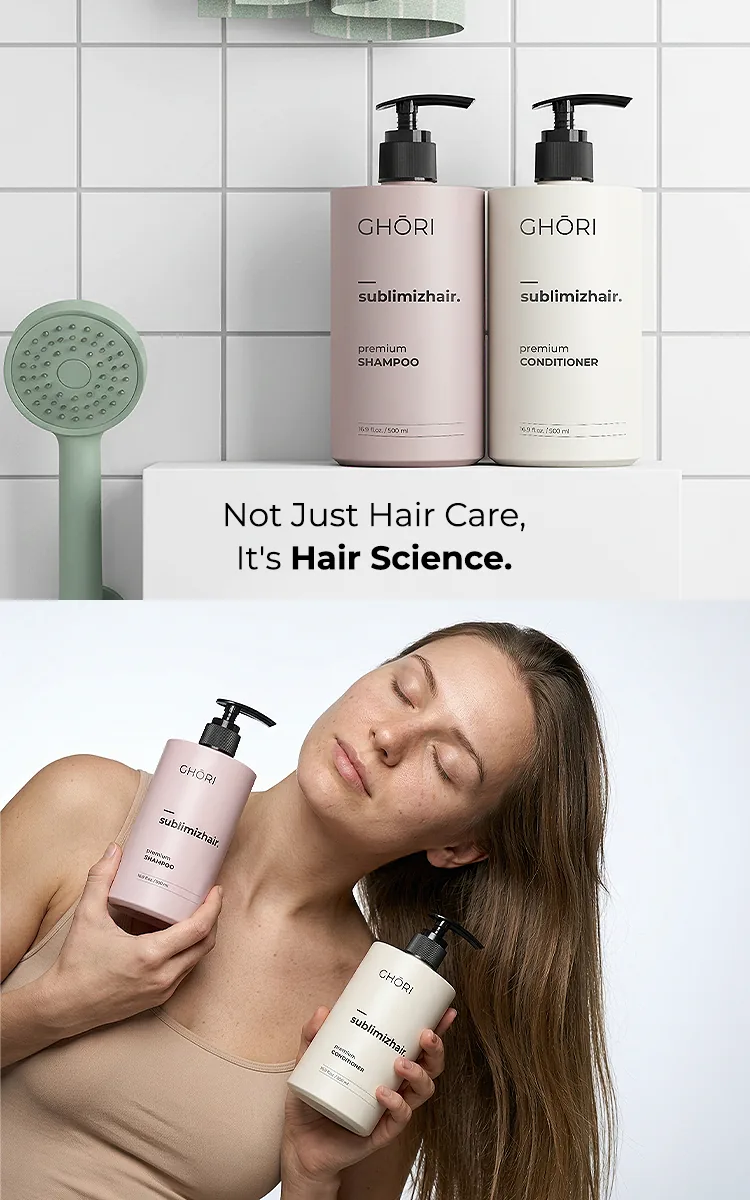
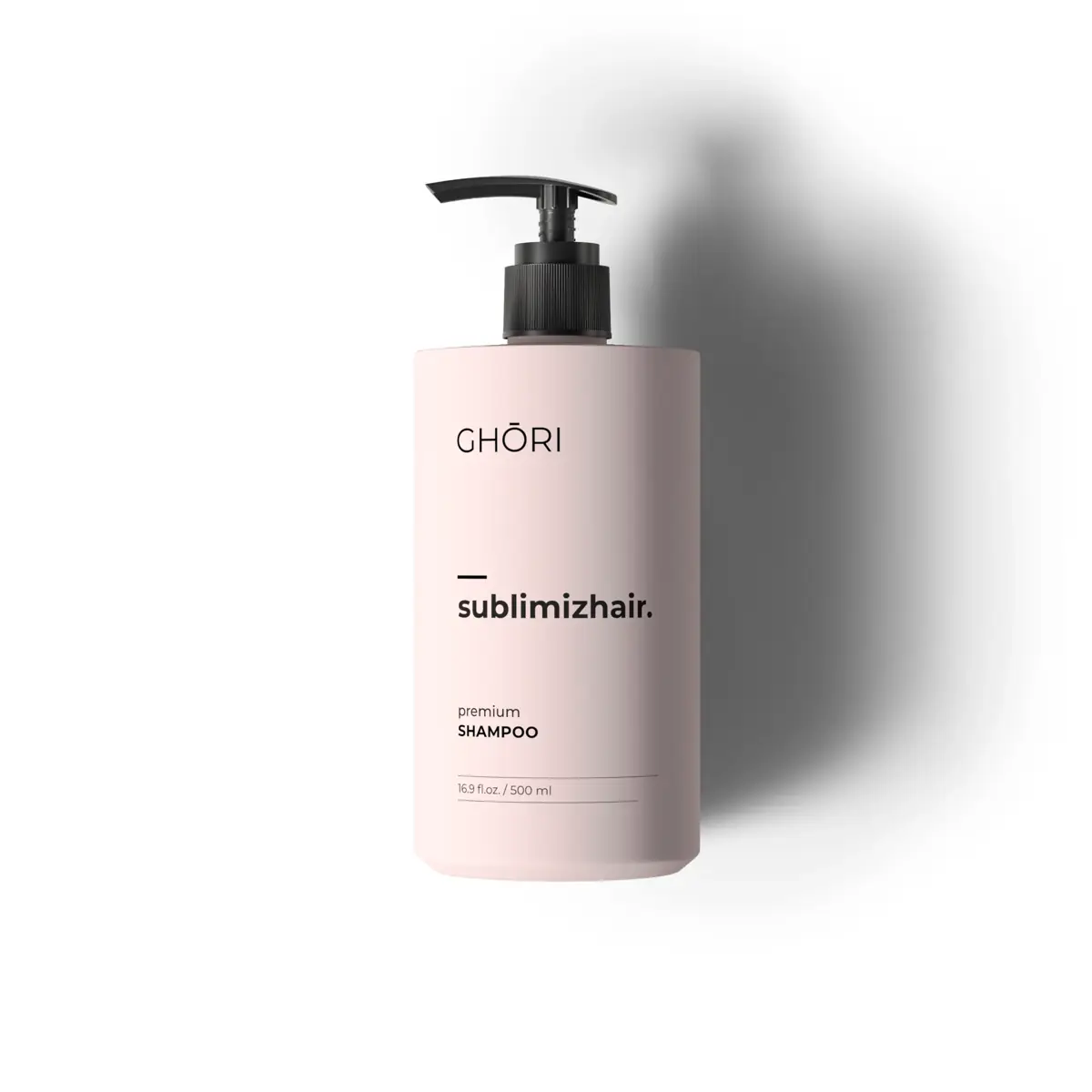
Read past the front label. A well-mannered cleanser pairs its surfactants with soothing botanicals, keeps its pH in the skin-friendly range of roughly 5.5–6.5, and rinses clean without that squeaky, stripped feeling — squeaky is not clean; squeaky is bare. It's the philosophy behind our own Sublimizhair Natural Premium Shampoo: a controlled, buffered cleanse wrapped in Hanbang botanicals like chrysanthemum and gleditsia, balanced to the scalp's natural acidity, so it removes the day without removing your defences.
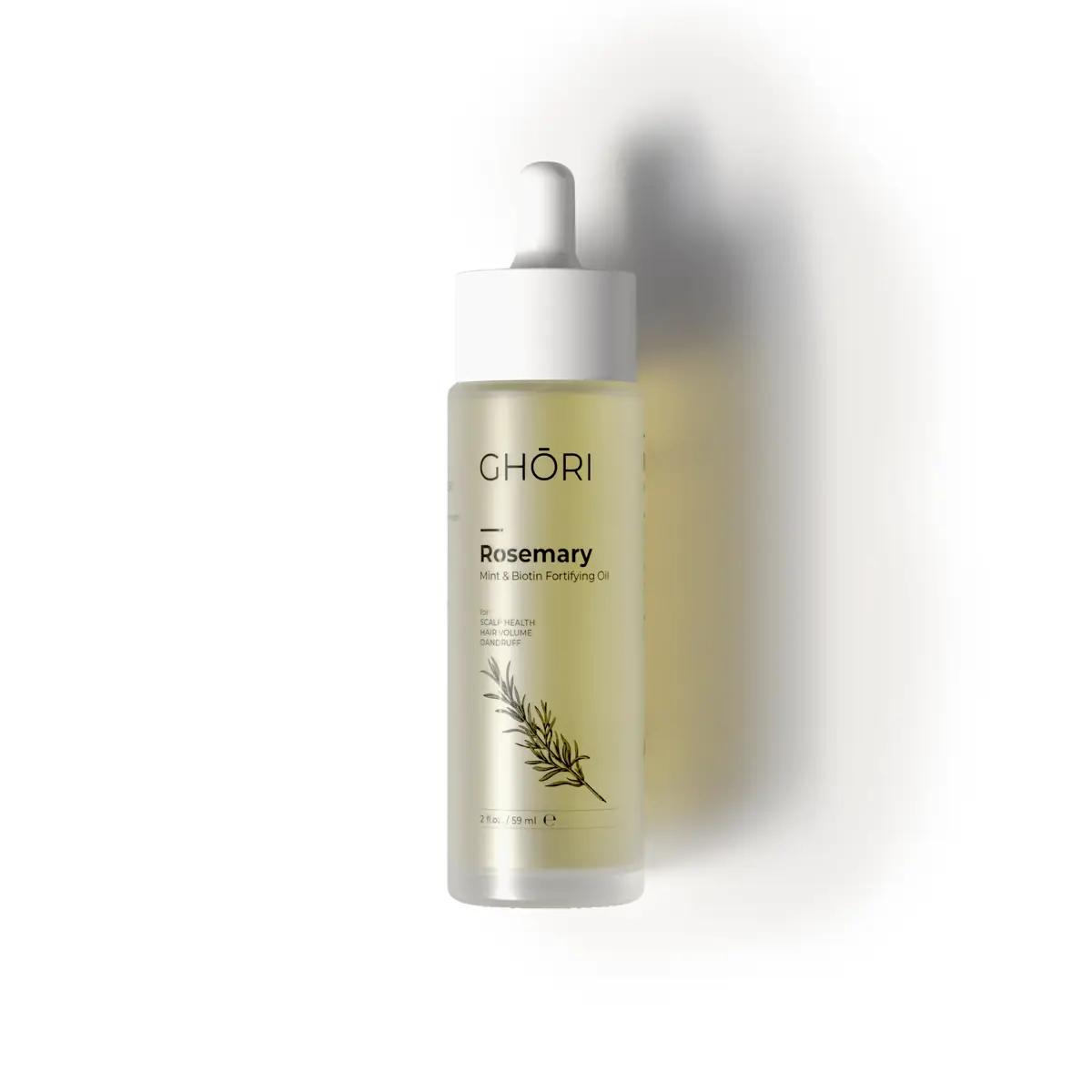
And if your scalp has already been through years of aggressive washing? Rebuild the barrier from both sides: a pH-balanced cleanse, followed by a few drops of a nourishing oil — rosemary and biotin if growth is the goal — massaged into the scalp between washes.
Sulfates strip more than dirt when the formula around them is careless. Choose formulas that aren't.
Editor's note
Continue the ritual: Sublimizhair Natural Premium Shampoo · Rosemary, Mint & Biotin Fortifying Oil
— The Ghori Editorial
Formulas from this dispatch
Take it to the shelf
Circulate the dispatch
If a friend has asked the same question, hand them the answer.
Continue reading