RosemaryOilvsMinoxidil:WhattheResearchActuallySays
A 2015 clinical trial compared rosemary oil with minoxidil 2% for hair growth. What the study found, where each option fits, and how to use rosemary oil properly.
- Author
- The Ghori Editorial
- Filed under
- Science
- Length
- ≈ 750 words
- Sections
- 8 sections
Direct answer
The premise, stated plainly before we open the archive.
“Rosemary oil is not an established substitute for minoxidil. One small 2015 study comparing rosemary oil with minoxidil 2% found improved hair counts in both groups at six months, but this does not establish equivalence to modern minoxidil treatment or prove that every rosemary blend treats hair loss. Cosmetic oils can condition hair; persistent, sudden or patchy shedding needs medical advice.”
The study everyone cites
In 2015, a randomised trial published in SKINmed followed 100 people with androgenetic alopecia — common pattern hair loss — for six months. Half applied rosemary oil to the scalp daily; half used minoxidil 2%, the pharmaceutical standard. At the three-month mark, neither group showed significant change. At six months, both groups showed a significant increase in hair count — with no significant difference between them. The rosemary group also reported less scalp itching.
That is a genuinely striking result for a botanical oil. It is also exactly one study, using minoxidil at 2% (the 5% concentration is now more common), on one type of hair loss. Honest reading: rosemary oil has real, clinically observed effects on hair count — and the evidence base is younger and thinner than minoxidil's decades of trials.
Why rosemary oil plausibly works
Mechanistically, rosemary earns its reputation several ways. Its key compounds improve microcirculation in the scalp, increasing the delivery of oxygen and nutrients to the follicle. It has anti-inflammatory and antioxidant properties — relevant because chronic scalp microinflammation is increasingly linked to thinning. And some laboratory research suggests it may partially inhibit the same hormonal pathway (DHT at the follicle) that drives pattern loss, though this is the least established part of the picture.
Minoxidil, by contrast, is a vasodilator drug that extends the follicle's growth phase. It works — and it comes with drug realities: possible scalp irritation, an initial shedding phase, and the well-known catch that results reverse if you stop.
Where each one fits
If your hair loss is significant, sudden, or distressing, see a dermatologist first — pattern loss, telogen effluvium, and scalp conditions all look similar from above and are treated differently. Minoxidil remains the evidence-heavyweight for diagnosed androgenetic alopecia.
Rosemary oil fits three situations well. Early or mild thinning, where you want to act before escalating to pharmaceuticals. Alongside a broader scalp-health ritual, since unlike minoxidil it conditions the scalp rather than irritating it. And for anyone who has tried minoxidil and couldn't tolerate it. The two are not mutually exclusive either — many people layer botanical scalp care around a pharmaceutical routine, though check timing with your dermatologist.
How to use it so it can actually work
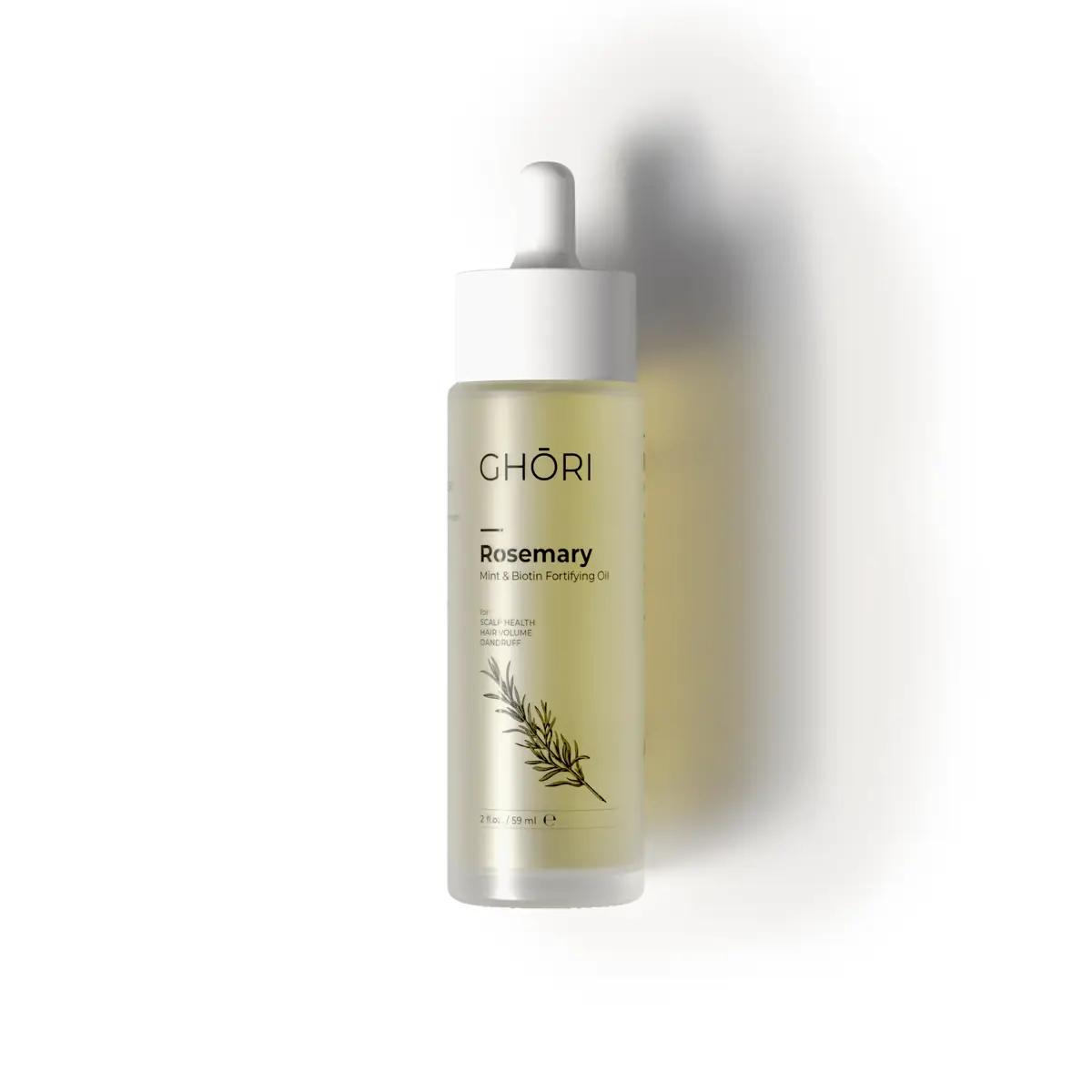
Follow your product's label rather than assuming it matches a clinical trial preparation. Our Rosemary, Mint & Biotin Fortifying Oil is a cosmetic blend, not the tested study formulation or a medicine. Patch-test first, avoid damaged skin and stop if irritation develops.
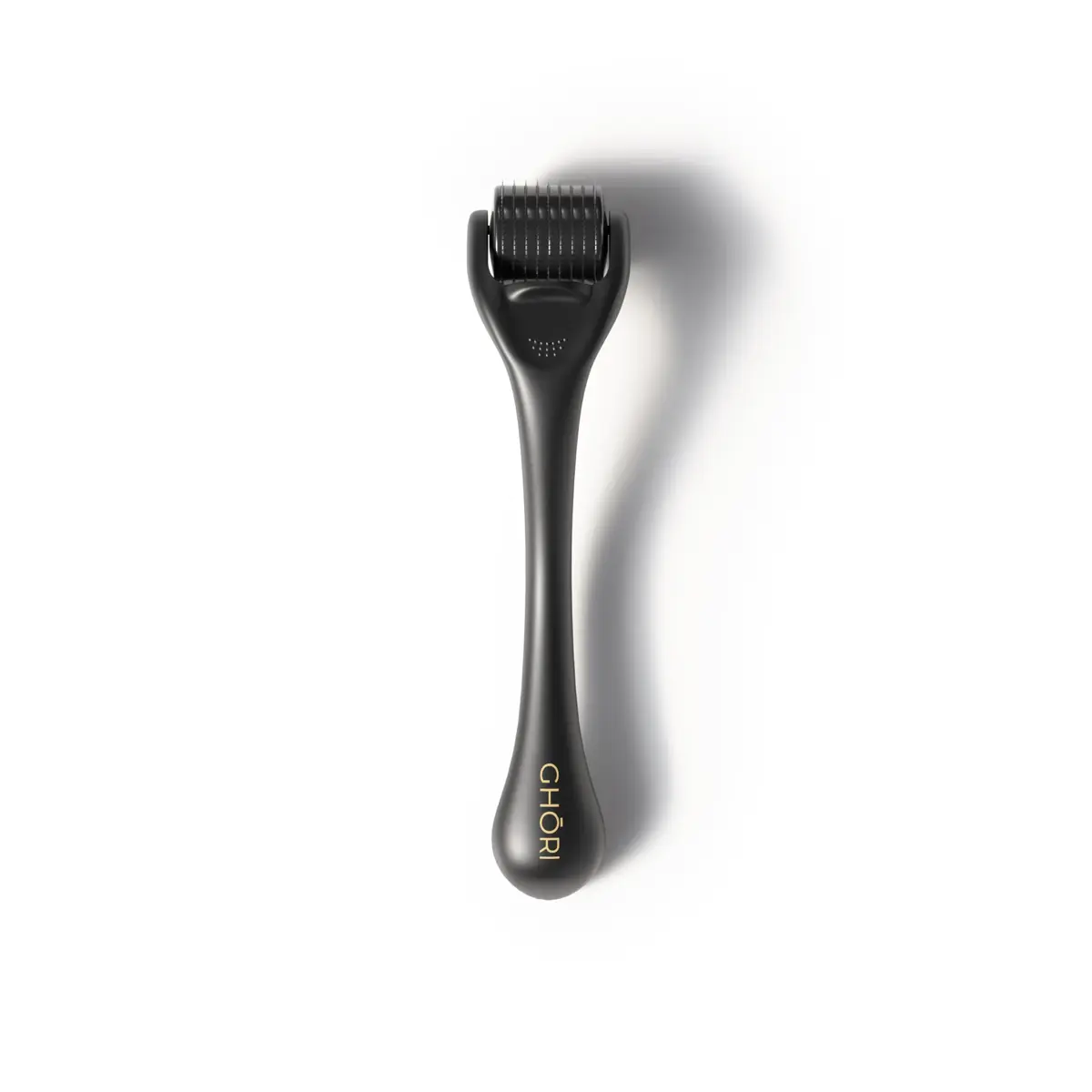
Keep rolling separate from oil application. Do not apply essential oils or fragranced products to freshly needled skin; our derma roller guide explains the precautions. A dermatologist can advise on hair loss and whether microneedling is appropriate.
Rosemary oil vs minoxidil at a glance
Evidence: minoxidil has decades of trials and regulatory approval; rosemary oil has one well-known head-to-head trial plus supporting lab research.
How it works: minoxidil is a vasodilator drug that lengthens the growth phase; rosemary oil supports scalp circulation, calms inflammation and may modestly act on DHT at the follicle.
Time to results: both showed meaningful change only at six months in the 2015 trial — expect nothing visible before week eight to twelve.
Side effects: minoxidil can cause itching, dryness, an early shedding phase and, rarely, unwanted facial hair; rosemary oil was linked to less scalp itching, though undiluted essential oil can irritate, so use it within a carrier blend.
If you stop: minoxidil gains typically reverse within months; rosemary oil has no known rebound shedding, but any benefit depends on continued use.
How long does rosemary oil take to work for hair growth?
The small 2015 trial found a change in hair count at six months, not three. That result does not predict a timeline for every rosemary product or individual. There is no established guarantee that a cosmetic oil will regrow hair. Persistent, sudden or patchy shedding should be assessed by a qualified clinician.
Can you use rosemary oil and minoxidil together?
Ask your dermatologist or pharmacist before combining a cosmetic oil with minoxidil; follow the medicine's label and avoid layering products on irritated skin. Do not use a roller to increase medicine or essential-oil absorption without professional supervision. See our derma roller precautions and our guide to cleansing ingredients for additional context.
Who should not use rosemary oil?
Skip it or patch-test first if you have very sensitive skin, an active scalp condition (open wounds, severe dermatitis), or a known allergy to rosemary or mint. If you're pregnant, breastfeeding, have epilepsy or take blood thinners, check with your doctor before using rosemary essential oil regularly. Always do a 24-hour patch test behind the ear. For a step-by-step routine, see our thinning hair ritual.
Editor's note
Continue the ritual: Rosemary, Mint & Biotin Fortifying Oil · Derma Roller
— The Ghori Editorial
Formulas from this dispatch
Take it to the shelf
Circulate the dispatch
If a friend has asked the same question, hand them the answer.
Continue reading