WhyHairTurnsGrey—andWhatCanActuallyBeDone
Greying is a slowdown of melanin production, not an on/off switch. The biology of grey hair, the role of stress and oxidative damage, and the options beyond dye.
- Author
- The Ghori Editorial
- Filed under
- Science
- Length
- ≈ 400 words
- Sections
- 3 sections
Direct answer
The premise, stated plainly before we open the archive.
“Every strand of coloured hair on your head is running a tiny pigment factory. At the base of each follicle, cells called melanocytes produce melanin — eumelanin for brown and black tones, pheomelanin for red and gold — and inject it into the growing hair shaft. Grey hair is what happens when a factory slows its output. White hair is a factory that has closed.”
Why the factories slow down
The largest factor is written in your DNA: genetics set the schedule, which is why greying patterns run so visibly in families and vary so widely between them. But biology rarely runs on genetics alone, and research over the past decade has filled in the rest of the picture.
Oxidative stress is the big one. Producing melanin is chemically demanding work that generates hydrogen peroxide as a by-product. Young follicles neutralise it efficiently; with age, the clean-up enzymes decline, peroxide accumulates, and it damages the very melanocytes producing the pigment — a factory slowly polluted by its own exhaust. UV exposure, smoking, and pollution pile onto the same oxidative burden.
Then there is stress — no longer just folklore. Landmark research in recent years showed that stress hormones can deplete the melanocyte stem cells that replenish the pigment factories. Intriguingly, a 2021 study documented something long thought impossible: individual hairs that had begun greying regaining pigment when the person's stress lifted. Nutritional gaps — notably vitamin B12, iron, copper, and vitamin D deficiencies — are also associated with premature greying, and are among the few causes that are directly correctable.
What this means for "reversing" grey
Here is the honest map of the territory. Hair that has fully whitened — where melanocytes are gone — cannot currently be repigmented by any cosmetic. But the long middle phase of greying, where factories are slowed rather than closed, is more interesting. If pigment cells are still present and underperforming, supporting the follicle environment — reducing oxidative load, improving circulation and nutrition at the root, addressing deficiencies and chronic stress — targets the machinery that still exists.
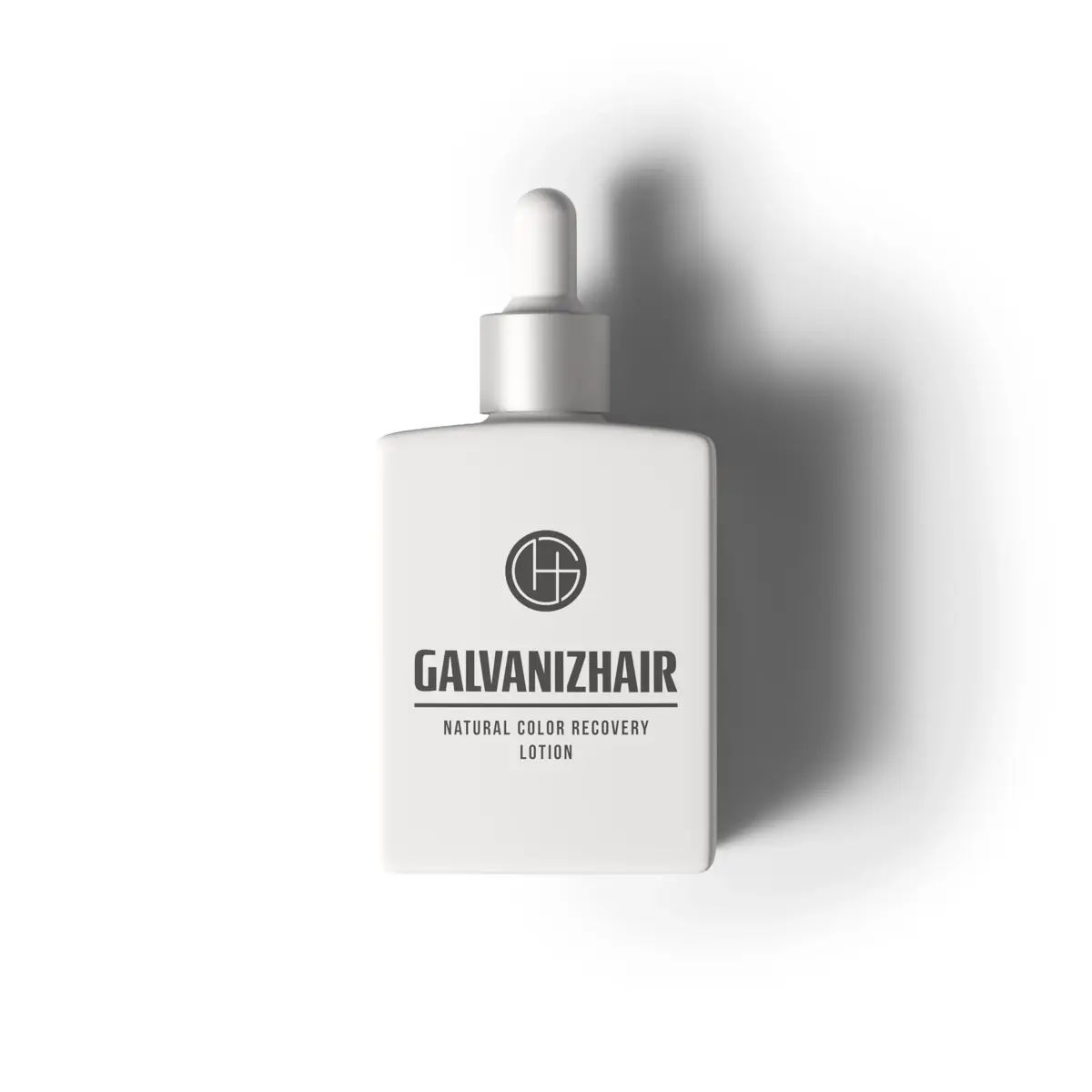
This is the philosophy behind Galvanizhair, our Belgian-formulated colour recovery lotion. Rather than coating the strand with dye, it works at the root to support the hair's own melanin activity, so returning pigment is gradual and unmistakably yours — no flat single-tone colour, no line of regrowth. Like everything that works with biology rather than over it, it demands consistency: daily application, with first changes typically appearing after four to eight weeks.
The realistic ritual
Whether you embrace your silver or negotiate with it, the same habits serve you: protect the scalp from UV, don't smoke, eat for your follicles, manage the stress you can, and treat greying early rather than late — a slowing factory is easier to support than a closed one. And if you choose to intervene, choose methods honest about their timelines. Colour that returns gradually was never really gone; it was waiting for better working conditions.
Editor's note
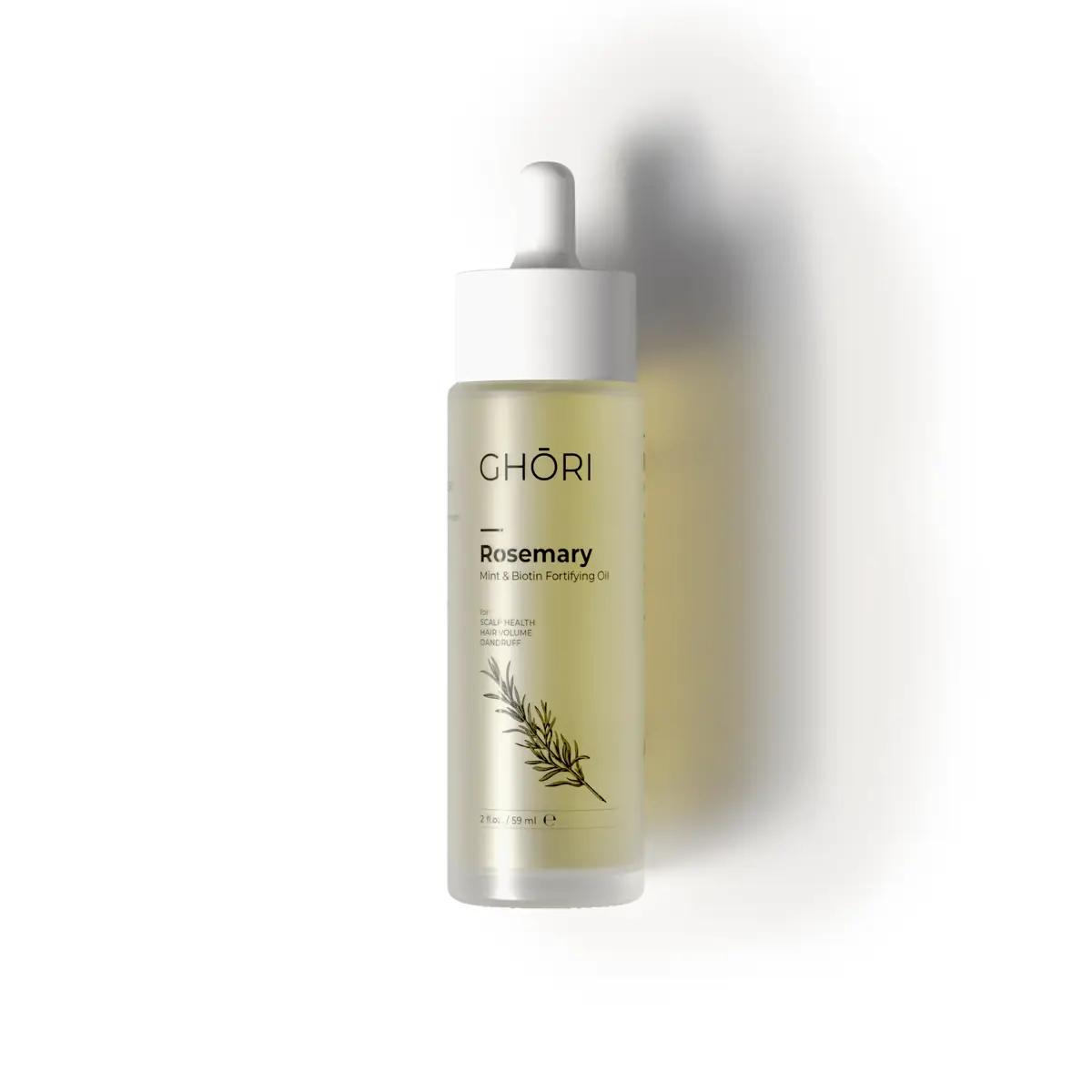
Continue the ritual: Galvanizhair Hair Serum · Rosemary, Mint & Biotin Fortifying Oil
— The Ghori Editorial
Formulas from this dispatch
Take it to the shelf
Circulate the dispatch
If a friend has asked the same question, hand them the answer.
Continue reading