TheCaseforCold-PressedOils
Heat and solvents make oil production cheap — and strip out most of what makes an oil work. Why cold-pressed moringa and castor oil outperform refined versions.
- Author
- The Ghori Editorial
- Filed under
- Ingredient
- Length
- ≈ 400 words
- Sections
- 4 sections
Direct answer
The premise, stated plainly before we open the archive.
“Two bottles of castor oil sit on a shelf. Same plant, same colour, similar price. One will visibly condition your brows within a month; the other will mostly just sit there, glossy and inert. The difference isn't the plant. It's what happened between the seed and the bottle.”
How most oil is made
Commercial oil extraction is a volume business. Seeds are cooked at high temperatures to loosen their oil, pressed hard and fast, and the leftover pulp is often washed with a petroleum-derived solvent — typically hexane — to squeeze out the last percentage points of yield. The resulting crude oil is then refined, bleached, and deodorised to make it look and smell neutral.
Every one of those steps costs something. Heat degrades the fragile compounds that make botanical oils biologically interesting: tocopherols (vitamin E), carotenoids, phytosterols, and the delicate fatty-acid structures that let an oil actually integrate with hair and skin rather than coat them. What survives is technically still oil — a decent lubricant, a passable shine agent — but the pharmacy has been burned out of it.
What cold-pressing preserves
Cold-pressing takes the slow road: seeds are mechanically crushed at low temperatures, with no solvents and no refining. Yields are lower, costs are higher, and the oil retains its full native profile — colour, scent, and, crucially, actives.
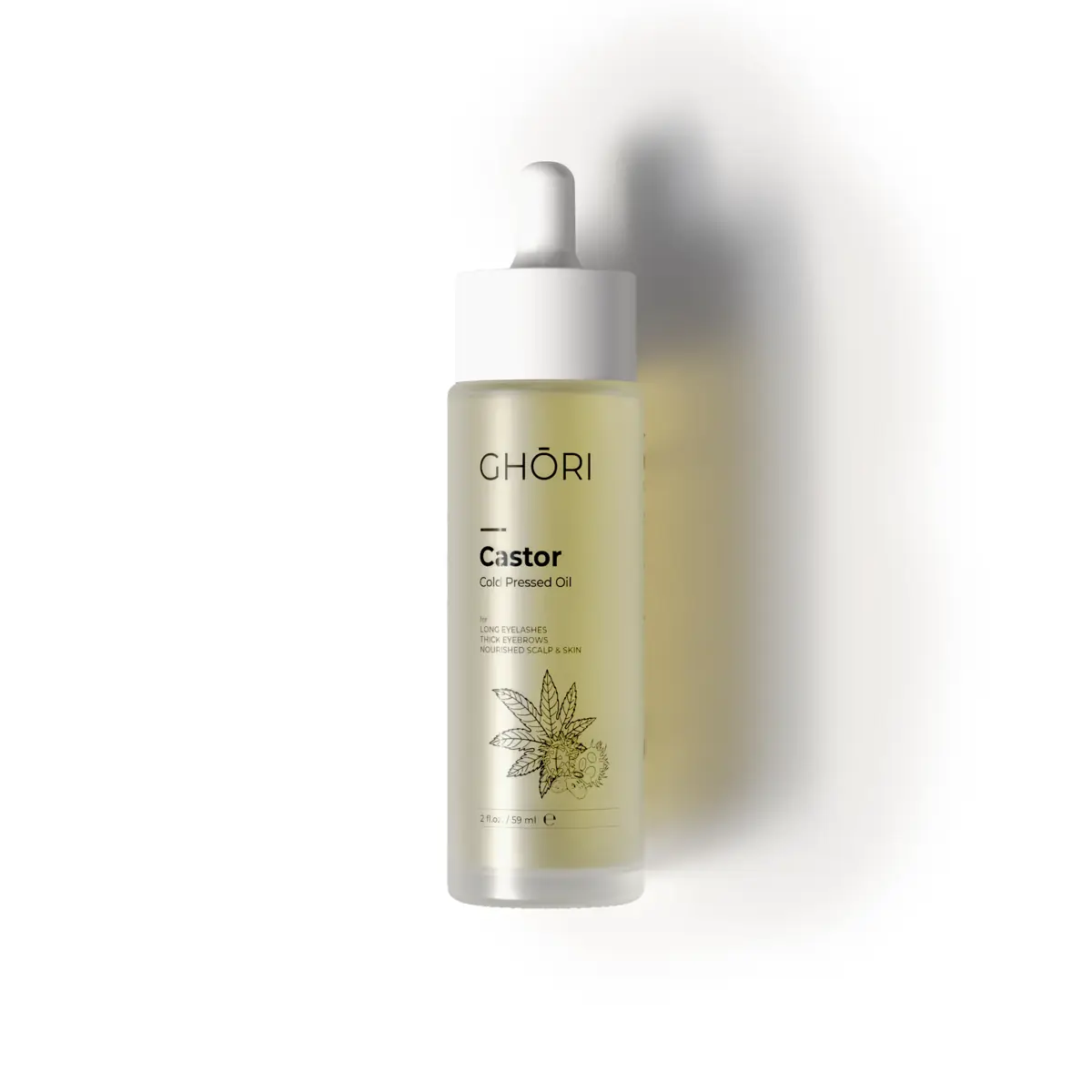
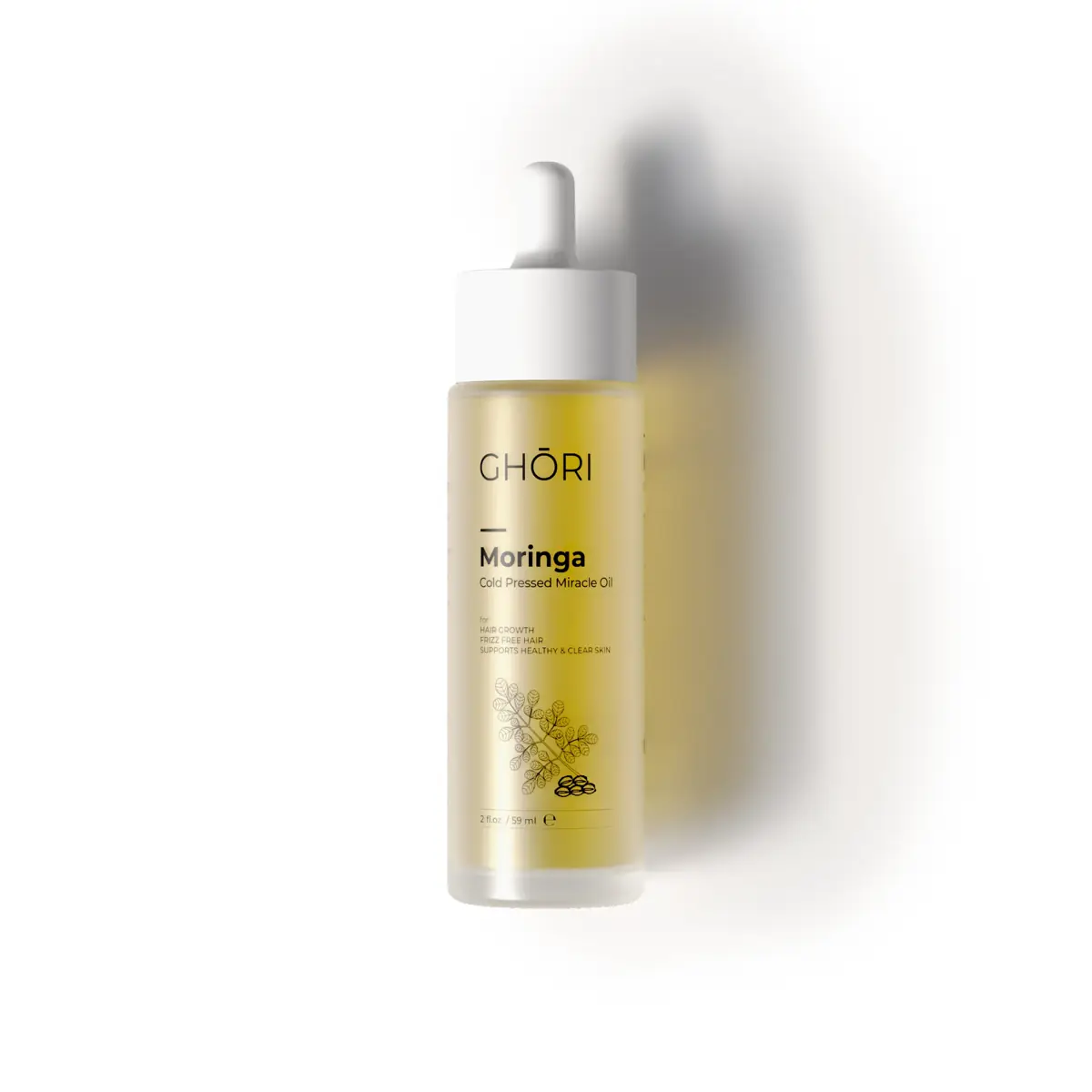
Consider the two oils in our own collection. Cold-pressed castor oil keeps its extraordinary concentration of ricinoleic acid — the unusual omega-9 fatty acid, roughly ninety percent of the oil, that gives castor its centuries-old reputation for conditioning brows, lashes, and scalp. And cold-pressed moringa oil retains the oleic and behenic acids that let it smooth the hair cuticle and absorb almost instantly — along with a natural antioxidant profile so stable that ancient Egyptians used moringa oil as a preservative. Refine either oil aggressively and you keep the texture but lose much of the point.
How to spot the real thing
A few honest tells. Cold-pressed oils usually declare it proudly, because it costs more to do. They tend to carry some natural colour and a faint scent of their source — a totally colourless, odourless "pure" botanical oil has usually been through the refinery. And they list exactly one ingredient: the oil itself, by its botanical name. Ricinus communis seed oil. Moringa oleifera seed oil. Full stop.
There's also the texture test. A well-made cold-pressed oil behaves: moringa vanishes into hair and skin in seconds; castor is rich but workable. Heavily processed oils often feel simultaneously greasier and less effective — sitting on the surface because the compounds that helped them absorb didn't survive processing.
The slower way wins
Cold-pressing is, in the end, a philosophy disguised as a production method: don't force the seed, don't rush the process, don't strip out the parts you can't market. In a category crowded with shortcuts, the oils made the slow way are still the ones that work.
Editor's note
Continue the ritual: Premium Cold-Pressed Castor Oil · Moringa Frizz Control Miracle Oil
— The Ghori Editorial
Formulas from this dispatch
Take it to the shelf
Circulate the dispatch
If a friend has asked the same question, hand them the answer.
Continue reading