Rosemaryoilforhair:benefits,howtouseitandresults
The complete guide to rosemary oil for hair — the benefits, how to dilute and apply it, how often, and what to expect in 90 days.
- Author
- The Ghori Editorial
- Filed under
- Ritual
- Length
- ≈ 850 words
- Sections
- 12 sections
Direct answer
The premise, stated plainly before we open the archive.
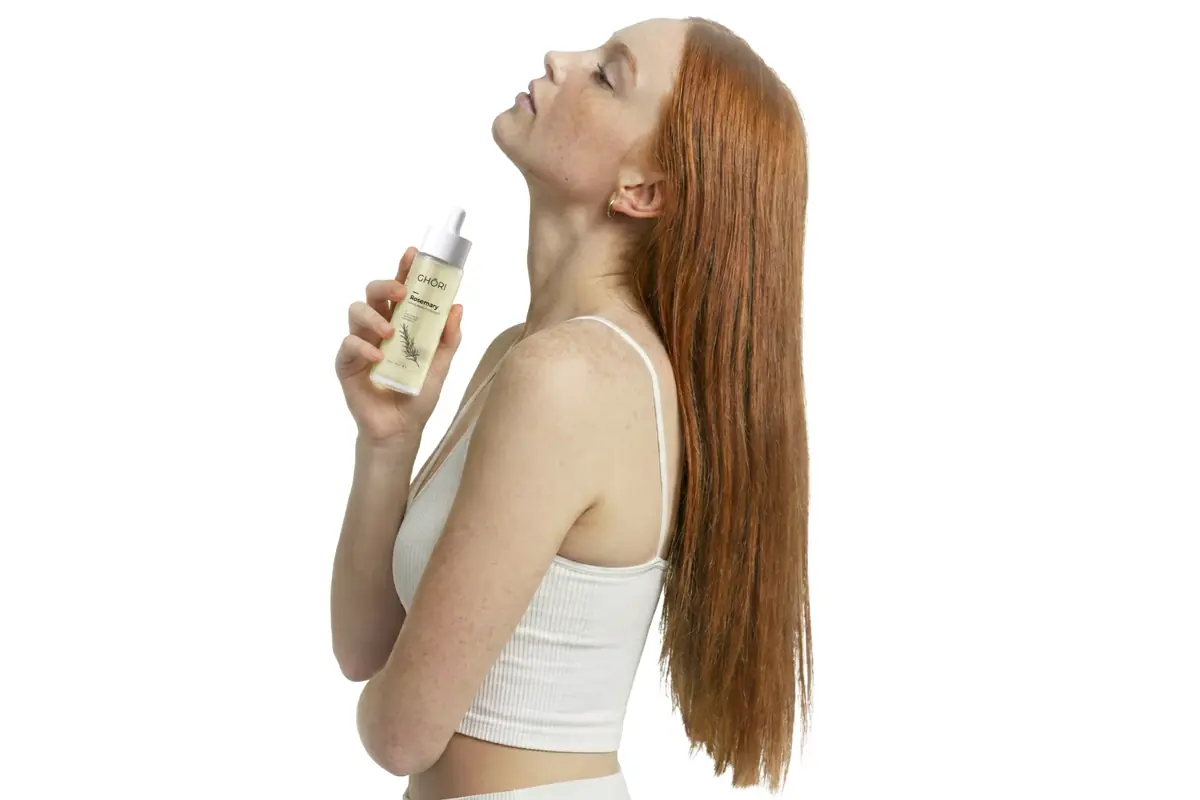
“To use rosemary oil for hair growth: warm 6–10 drops of a rosemary-based scalp oil (like Ghori Rosemary, Mint & Biotin Fortifying Oil) between your palms, part dry or slightly damp hair in sections, and press the oil directly into the scalp — not the lengths. Massage in slow circles for 3–5 minutes to stimulate circulation, leave on for at least 30 minutes (or overnight), then wash out with a sulfate-free shampoo. Repeat 3–4 times a week for 12–16 weeks to see measurable density change. Consistency, scalp-only placement, and massage matter more than the amount used.”
What are the benefits of rosemary oil for hair?
Rosemary oil is one of the few botanical hair oils with clinical research behind it. Its main benefits for hair are: better blood flow to the scalp, which supports follicles in the growth phase; a calming effect on mild scalp irritation and itch; help with flaking when used in a balanced blend; and less breakage when massaged in regularly. It does not regrow hair on fully bald areas, and results vary from person to person — but for early thinning, shedding after stress, or a tired-feeling scalp, it is a well-studied, low-cost place to start.
Rosemary oil vs rosemary essential oil — what's the difference?
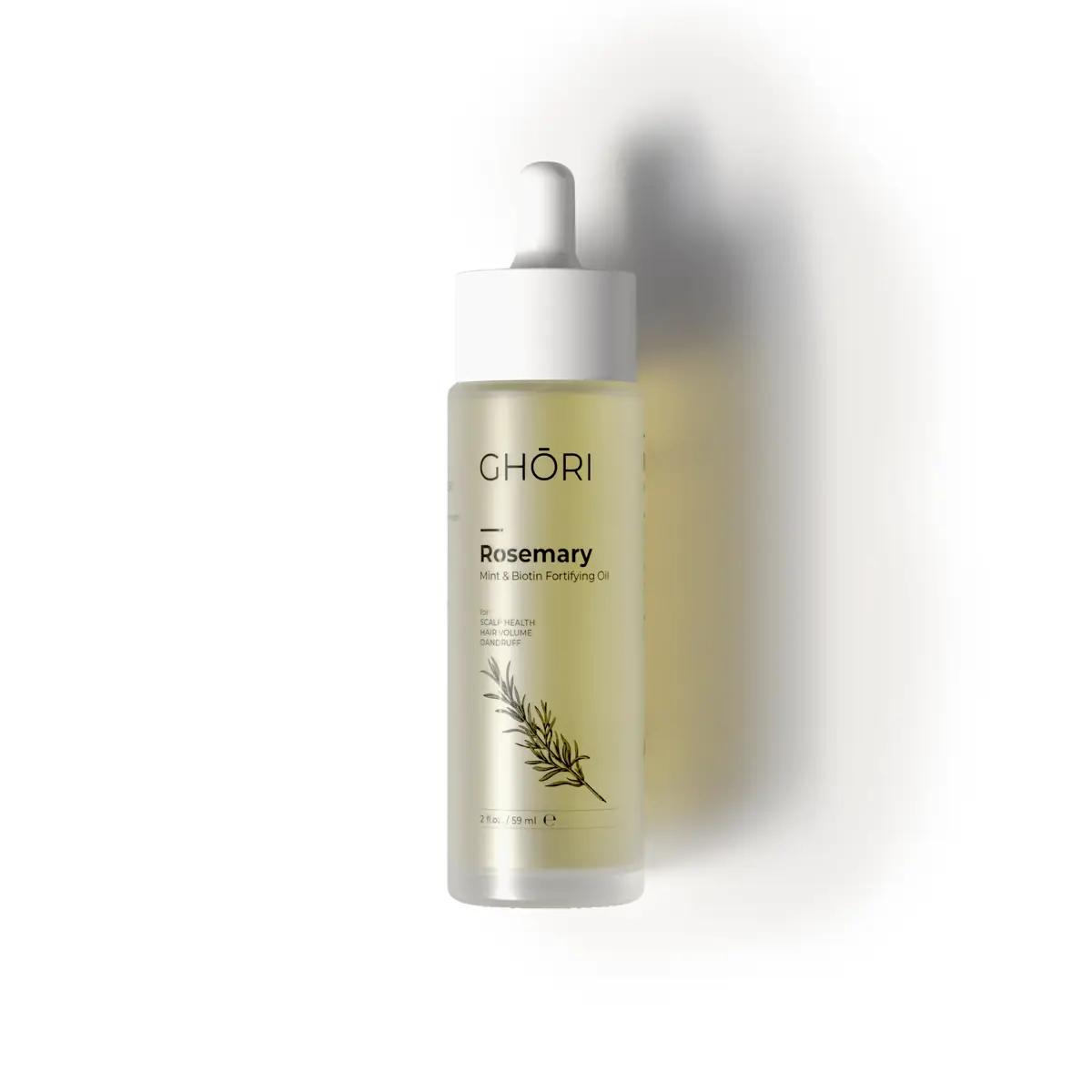
Rosemary essential oil is highly concentrated and must never go on the scalp undiluted. A rosemary hair oil is essential oil already diluted in carrier oils at a safe level, ready to apply. If you buy pure essential oil, mix 2–3 drops per tablespoon of jojoba, argan or castor oil. If you want to skip the mixing, a ready blend like our Rosemary, Mint & Biotin Fortifying Oil is formulated for direct scalp use.
How to make rosemary oil for hair at home
Simplest method: add 2–3 drops of rosemary essential oil to one tablespoon of a carrier oil (jojoba is lightest; castor is thickest), mix, and use within a week. Infused method: pack fresh or dried rosemary sprigs into a clean glass jar, cover with olive or jojoba oil, and leave in a warm, dark place for 2–3 weeks, then strain. Home infusions are gentle but weaker and less consistent than a measured formula, and they can spoil — discard if the smell changes.
Why rosemary oil works for hair growth
A landmark 2015 clinical trial published in SKINmed compared rosemary oil to 2% minoxidil over six months and found comparable hair-count increases, with less scalp itching in the rosemary group. The active compounds — 1,8-cineole, camphor and carnosic acid — improve microcirculation at the follicle, inhibit the DHT pathway associated with androgenic thinning, and calm the low-grade inflammation that shortens the anagen (growth) phase. Rosemary is not a miracle oil; it is a well-studied vasodilator and 5-alpha-reductase modulator that rewards patient, consistent use.
How much rosemary oil should I use?
For a scalp application, 6–10 drops of a pre-diluted formula is plenty. Pure rosemary essential oil must always be diluted — 2–3 drops per tablespoon of carrier (jojoba, argan or a formulated scalp oil) — because undiluted essential oil can trigger contact dermatitis. A ready-made blend like the Ghori Rosemary, Mint & Biotin Fortifying Oil is diluted to a safe topical concentration and pairs rosemary with peppermint (extra vasodilation) and biotin (keratin support), which is why we recommend it as the base for the ritual below.
The step-by-step rosemary oil ritual
Step 1: Part clean, dry hair into four sections. Applying to a clean scalp lets the oil reach the follicle rather than sitting on product build-up. Step 2: Dispense 6–10 drops into your palms, rub to warm. Step 3: Using fingertips (not nails), press the oil directly onto the scalp along each parting — cover the crown, temples and hairline where thinning appears first. Step 4: Massage in slow circles for 3–5 minutes. This is the step most people skip and the one that matters most for circulation. Step 5: Leave on for a minimum of 30 minutes; overnight (with a silk pillowcase or hair wrap) is optimal. Step 6: Wash out with a sulfate-free shampoo, double-cleansing if needed.
How often should I apply it?
Follow the product label and adjust use if irritation develops. There is no established clinical frequency or guaranteed regrowth timeline for this cosmetic blend. Keep oil application separate from rolling sessions and use only on intact skin. Consult a dermatologist about persistent shedding.
Common mistakes to avoid
Applying to lengths instead of scalp (wastes product and weighs hair down). Using undiluted essential oil (irritation risk). Rinsing too soon (the actives need contact time). Skipping the massage (the mechanical stimulation is half the benefit). Expecting results in weeks (the hair cycle is 90+ days). And piling on unrelated actives at the same time — keep the ritual simple: rosemary oil, massage, sulfate-free wash.
Who should not use rosemary oil?
Skip rosemary oil during pregnancy (traditionally contraindicated in the first trimester). Anyone with epilepsy should avoid concentrated rosemary essential oil, as the camphor content can be a seizure trigger. Patch-test on the inner forearm 24 hours before the first scalp application if you have sensitive skin or a known essential-oil allergy. For the full picture, read rosemary oil side effects.
How long does rosemary oil take to work for hair?
Expect less shedding and a calmer scalp in 4–6 weeks, and visible density change around 12–16 weeks of use 3–4 times a week. The hair cycle is slow, so judge at three months, not three weeks. Curious how it compares with medication? Read rosemary oil vs minoxidil.
Can I leave rosemary oil in my hair overnight?
Yes — a diluted rosemary hair oil can stay on overnight, and longer contact gives the actives more time at the scalp. Use a silk pillowcase or wrap, and wash out in the morning with a sulfate-free shampoo. Never leave undiluted essential oil on the skin.
Where to buy rosemary oil for hair in the UAE
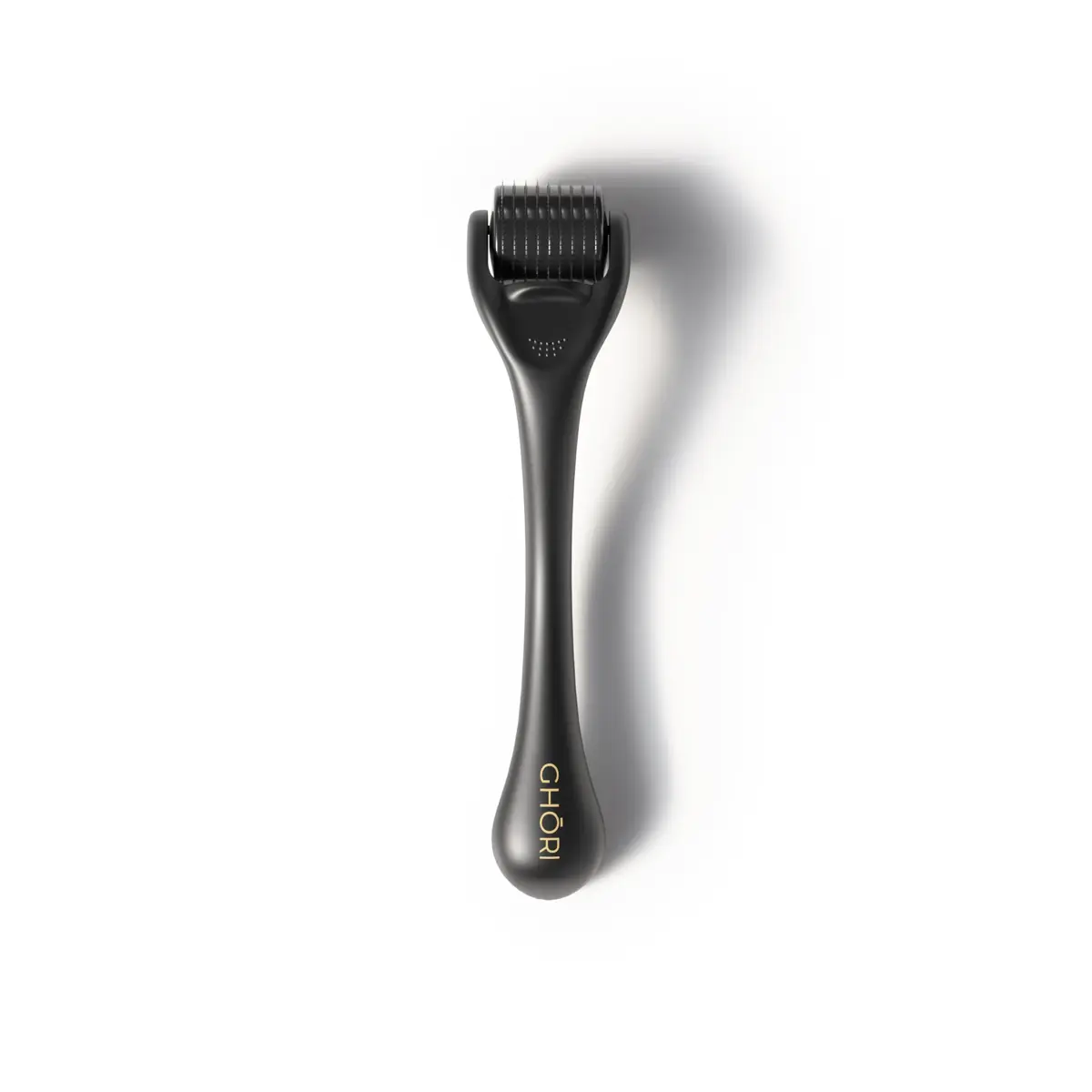
Look for a blend that lists rosemary leaf oil in the INCI, states its dilution or is labelled for direct scalp use, and is free from mineral oil and silicones. The Ghori Rosemary, Mint & Biotin Fortifying Oil is made for scalp use and ships across the UAE and GCC from our Dubai office, with cash on delivery available. Pair it with the derma roller or follow the full thinning hair ritual.
Formulas from this dispatch
Take it to the shelf
Circulate the dispatch
If a friend has asked the same question, hand them the answer.
Continue reading