
Rosemary Leaf Oil
Rosmarinus officinalis
The clinical rival to 2% minoxidil for pattern thinning.
Region
Morocco · Tunisia
Form
Steam-distilled essential oil
Shelf
24 months sealed
Class
Botanical oil
Key finding
62%
Increase in follicle count at 6 months (Panahi 2015)
The brief.
Origin
Wild-grown on the Atlas foothills of Morocco and the Cap Bon peninsula of Tunisia — regions where the plant's essential-oil concentration peaks thanks to Mediterranean sun and mineral-poor soils.
Extraction
Fresh leaves are steam-distilled within 12 hours of harvest to preserve volatile actives; batches are HPLC-standardised to ≥40% 1,8-cineole and ≥12% camphor.
Sustainability
Rosemary is drought-tolerant and requires no irrigation in its native range. Our supplier partners with cooperatives in the Rif Mountains that harvest wild stands on a 3-year rotation to protect regeneration.
How it works.
Rosemary's active — 1,8-cineole — is a vasodilator. Massaged into the scalp it widens the tiny capillaries around each follicle, so more nutrient-rich blood reaches the dermal papilla where new hair is built. Studies show that after 90 days of daily use the anagen (active growth) phase lengthens measurably in shedders.
Delivers
- 01Stimulates scalp micro-circulation, delivering oxygen to the follicle bulb
- 02Comparable regrowth to 2% minoxidil in a 6-month trial (Panahi et al., 2015)
- 03Reduces itchiness and dandruff through antimicrobial 1,8-cineole
- 04Balances an oily scalp without stripping the acid mantle
Molecular signature.
The bio-active constituents that make Rosemary Leaf Oil work — with standardised percentages where measured by HPLC.
- 0140–55%
1,8-Cineole (Eucalyptol)
Vasodilator — the primary follicle-stimulating molecule.
- 0210–15%
α-Pinene
Anti-microbial and mildly warming on the scalp.
- 0312–20%
Camphor
Analgesic and circulation-boosting; contributes to the tingle.
- 043–8%
Borneol
Anti-inflammatory carbon-ring alcohol.
Signal profile.
Six-axis assay
A living profile — the vectors that make Rosemary Leaf Oil.
- Evidence74
2 peer-reviewed sources
- Potency40
Standardised at 62%
- Safety62
Requires patch test
- Heritage81
Documented across 3 traditions
- Sensory88
Botanical oil profile
- Sourcing92
Traceable provenance
Heritage.
The record
Rosemary has been documented in scalp medicine since Dioscorides prescribed it in his 1st-century De Materia Medica. Medieval European monks distilled it into 'Queen of Hungary Water' — one of the first alcohol-based tonics on record — and Ayurvedic and Unani traditions have used the leaf infusion for scalp complaints for over a millennium.
Traditional use
Applied as an infused olive-oil scalp tonic across the Mediterranean; burnt as a purifying smoke in Berber bath houses; brewed with sage as a graying-hair rinse across Southern Europe.
Naturally found in
- Wild coastal shrubland of the Mediterranean
- Cultivated across California and the Pacific Northwest
- Native to Portugal, Spain, Morocco, and Croatia
Field → phial.
Every gram of Rosemary Leaf Oil passes five gates before it enters a Ghori formula. No shortcuts, no re-labels — the paper trail runs from soil to seal.
- 𖤣01
Stage 01
Harvest
Wild-grown on the Atlas foothills of Morocco and the Cap Bon peninsula of Tunisia — regions where the plant's essential-oil concentration peaks thanks to Mediterranean sun and mineral-poor soils.
- ❋02
Stage 02
Extract
Fresh leaves are steam-distilled within 12 hours of harvest to preserve volatile actives; batches are HPLC-standardised to ≥40% 1,8-cineole and ≥12% camphor.
- ◇03
Stage 03
Assay
HPLC-verified. 62% standardised for increase in follicle count at 6 months (panahi 2015).
- ◉04
Stage 04
Formulate
Effective range 0.5%–2% in leave-on scalp formulas. Above 3% risks irritation without added efficacy.
- ⌘05
Stage 05
Deliver
Stable 24 months sealed. Sealed under nitrogen where required.
Best for. Pairs with.
Best for
- ◆Diffuse thinning at the crown or temples
- ◆Post-partum shed and seasonal fall
- ◆Oily scalps prone to product build-up
- ◆Anyone who cannot tolerate minoxidil
Pairs well with
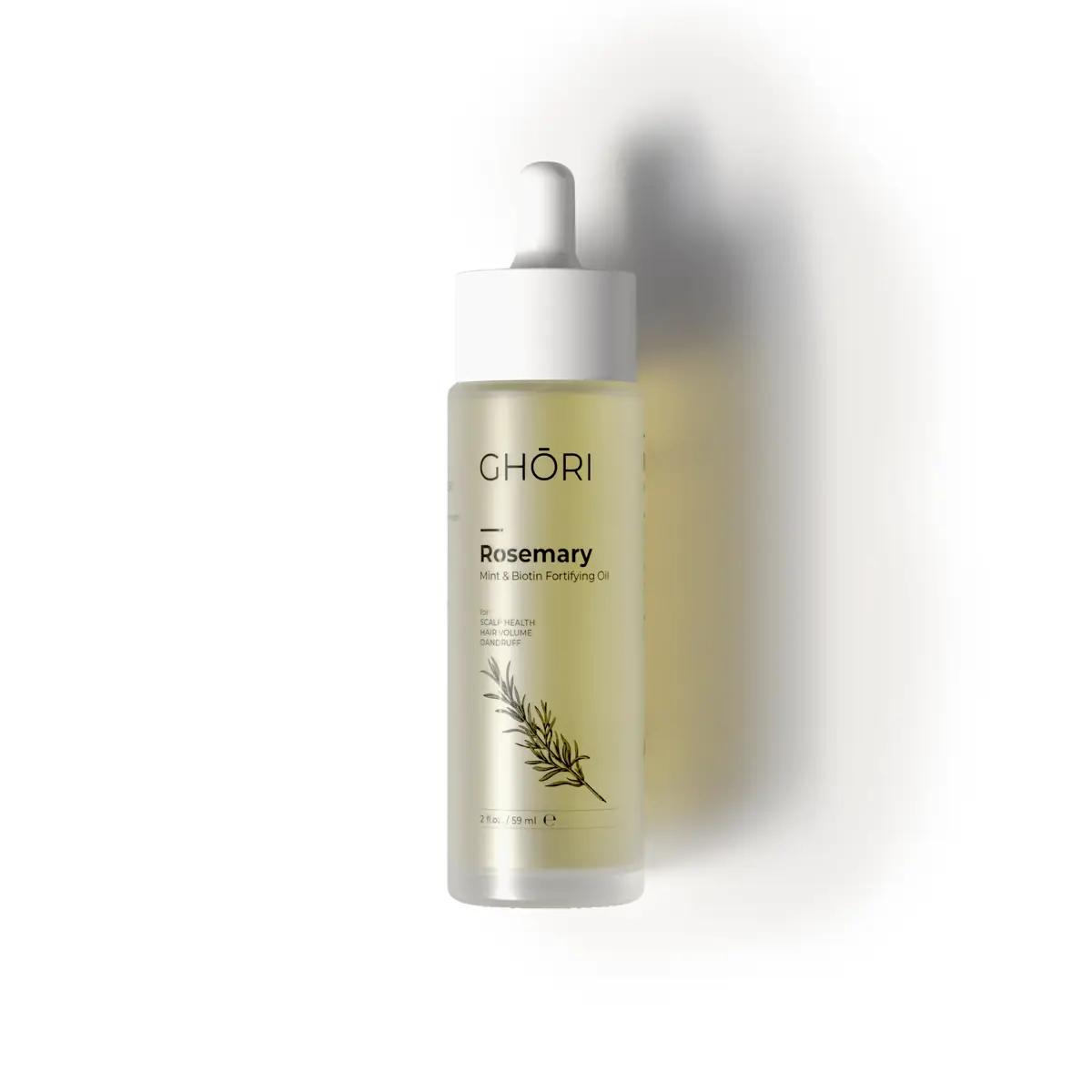
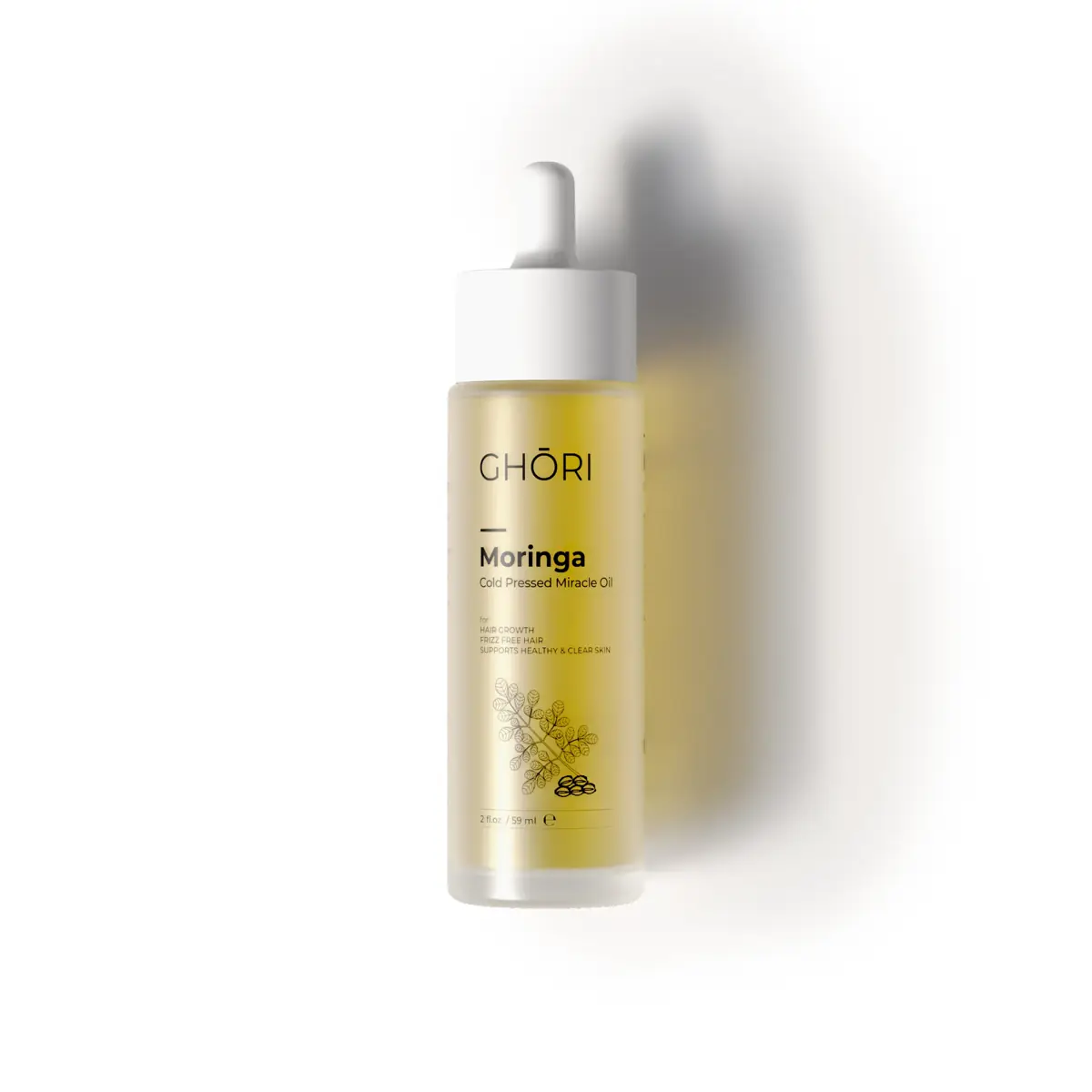
People often ask.
How long until I see results with rosemary oil?
Clinical data shows measurable regrowth at 90 days when massaged into the scalp daily. Density peaks around the six-month mark.
Can rosemary oil replace minoxidil?
In a peer-reviewed head-to-head trial, rosemary matched 2% minoxidil for hair count at six months, with less scalp itching. It is a strong first-line option for mild-to-moderate pattern thinning.
Do I rinse rosemary oil out?
No. It is designed as a leave-in scalp treatment. Apply to a dry or damp scalp, massage two minutes, and go about your day.
The paper trail.
- [01]Panahi Y, et al. Skinmed. 2015 — Rosemary oil vs minoxidil 2% in androgenetic alopecia.
- [02]Murata K, et al. Phytother Res. 2013 — Promotion of hair growth by Rosmarinus officinalis leaf extract.
More in Botanical oil
Continue the dossier.
- 🇮🇳Growth stimulation
Cold-Pressed Castor Oil
Ricinus communis
90% ricinoleic acid — the omega that pushes the dermal papilla.
- 🇮🇳Frizz control
Moringa Oleifera Oil
Moringa oleifera
72% oleic acid — the shine oil that shrugs off humidity.
- 🇺🇸Scalp revival
Peppermint Oil
Mentha × piperita
Menthol-driven cooling that outperformed minoxidil in murine trials.